

Project Mavuno — LushBert's demonstration plant on Lush Farms
Project Mavuno is a 350 kg/day biogas demonstration plant planned for Lush Farms in Kenya: a joint initiative of Lush Farms, which provides the site, and LushBert, whose company Lush Bert Ltd is the investor. It will show what LushBert's technology can do on Kenyan soil.
Why a demonstration plant matters
Until a Kenyan installation is up and running, LushBert's track record rests on reference plants in India, the Czech Republic and elsewhere. Project Mavuno changes that: once complete, it becomes the local proof point for schools, cooperative members and communities considering LushBert's technology — a site people can visit, see, and learn from directly.
Where it sits
Project Mavuno is located at Lush Farms, the working farm operated by LushBert's Kenyan co-founder Anthony Muigai — a site that combines pig, poultry and fish farming, a butchery, and Black Soldier Fly production. That mix of organic waste streams makes it a realistic, working test case for the technology, not a laboratory demonstration.
The technology
350 kg/day organic input
Sized for farm-scale waste volumes — manure, food and processing waste from Lush Farms' own operations.
Bert Panel Fermenter — Mira X series
Project Mavuno showcases Bert Energy's newest fermenter design: a modular panel fermenter built with Mira Carbon technology, part of the new Mira X product line — succeeding the earlier PON self-mixing generation with a lighter, faster-to-build system.
Outputs
Clean Cooking Gas (Heating and Hot Water) and nutrient-rich digestate (fertiliser) from farm waste that would otherwise need to be managed or disposed of.
Robotic construction & operation
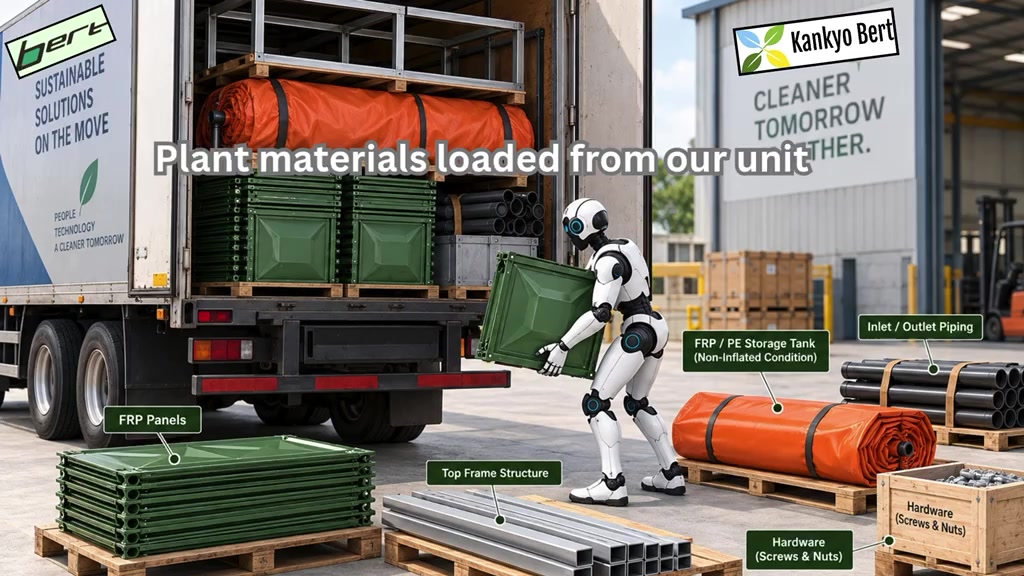
Project Mavuno will also demonstrate how a humanoid robot can assemble and operate the plant — technology being developed for the School Biogas Programme and future community installations, with a patent pending.
German engineering, Kenyan build
Based on Bert Energy's proven farm-scale biogas design, built and commissioned in Kenya with Lush Bert Ltd's local team.
What it costs and how fast it pays back
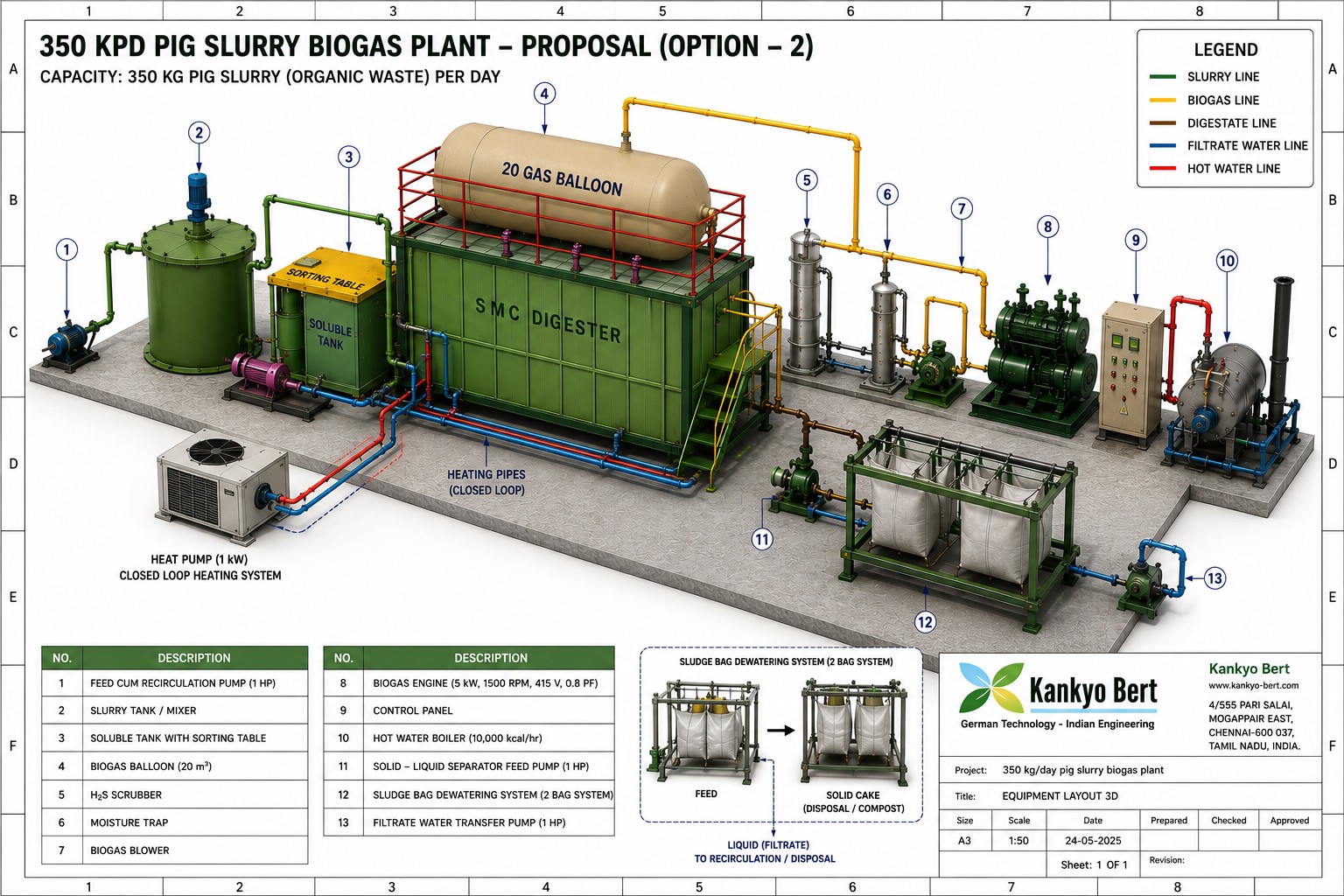
We show the real numbers so you can judge the project: what a plant of this size costs, what is installed for that money (see the equipment layout above), and how quickly it earns the investment back.
| Biogas sales (half of the gas output) | KES 1.73 M / year |
| Thermal energy savings (farm use) | KES 1.52 M / year |
| Electricity savings (farm use) | KES 0.30 M / year |
| Annual energy value | KES 3.55 M / year |
| Operating costs (KES 78,000 per month) | − KES 0.94 M / year |
| Net operating cash flow | ≈ KES 2.61 M / year |
Modelled base case at KES 129.3 per USD (investment ≈ KES 7.11 M): simple, undiscounted payback of ≈ 2.7 years, counting energy value only. Fertiliser, Black Soldier Fly, biochar, training and carbon credits are not counted. The investment figure is pending final supplier and logistics documentation. Design values and prices are assumptions, not guarantees.
Financing partners: the full financing package (detailed model, assumptions and supporting documents) is available on request at [email protected].
Status
- Bank financing is underway — Project Mavuno is in the financing pipeline.
- Commissioning and operation of the plant will start at the beginning of 2027.
Once commissioned, Project Mavuno will operate as LushBert's flagship reference installation in Kenya — supporting the School Biogas Programme, the 3BL Cooperative and future community projects with a real, visitable example of the technology in daily use.
Want to see Project Mavuno?
Get in touch if you'd like an update on progress, or to arrange a visit once the plant is commissioned.
Download the Project Mavuno Overview (PDF) Email [email protected]